
Postproduction studio: A Beginner’s Guide
A postproduction studio is where the magic really happens. It’s the creative and technical engine room where all the raw video footage and audio recordings are transformed into a polished, finished product. This is the stage where all the separate pieces—video clips, sound, and graphics—are expertly woven together, refined, and perfected to tell a compelling story.
What Exactly Is a Postproduction Studio?
Think of the entire video creation journey like preparing a gourmet meal. The first phase, covering everything from scripting to filming, is like sourcing the finest, freshest ingredients. The postproduction studio, then, is the master chef’s kitchen—the place where those ingredients are skilfully combined, seasoned, and presented as a stunning final dish.
But this stage goes far beyond just putting pieces together. It’s where the story’s emotional heart, its rhythm, and its entire visual mood are truly born. Without this critical phase, even the most beautifully shot footage remains just a collection of disconnected clips. The real alchemy begins when editors, colourists, sound designers, and visual effects artists collaborate to bring a vision to life.
The Bridge Between Filming and Final Product
Every single project, whether it’s a punchy 30-second advert or a feature-length film, depends on postproduction to connect the raw material with the audience. This is the transformative phase where the narrative structure is locked in, the pacing is perfected, and the overall aesthetic is defined.
This process is a fundamental part of the bigger content creation journey. To get a better sense of how it all fits together, our overview of the film production process details how shooting and postproduction work hand-in-hand. In short, postproduction makes sure the final product is not only technically flawless but also emotionally resonant and genuinely engaging.
A great postproduction studio doesn’t just fix problems—it discovers opportunities. It finds the hidden emotional beats in an actor’s performance, the perfect musical cue to heighten suspense, or the precise colour tone that makes a scene unforgettable.
Why This Stage Is So Vital
You simply can’t overstate the importance of postproduction. It’s the quality control centre and the creative finishing line, all rolled into one. Here are a few key reasons why this step is absolutely essential:
- Storytelling and Pacing: Editors meticulously arrange shots to control the flow of the narrative and its emotional impact, ensuring the story is both clear and captivating.
- Emotional Atmosphere: Through colour grading and sound design, artists can completely change the mood of a scene, making it feel tense, joyful, nostalgic, or futuristic.
- Polishing and Perfection: This is where minor imperfections are smoothed out. From removing unwanted background noise to stabilising a shaky camera shot, it all adds up to a professional final product.
- Brand Consistency: For corporate and commercial projects, postproduction is key to ensuring the final video aligns perfectly with a brand’s visual identity and messaging.
Exploring the Core Creative Services
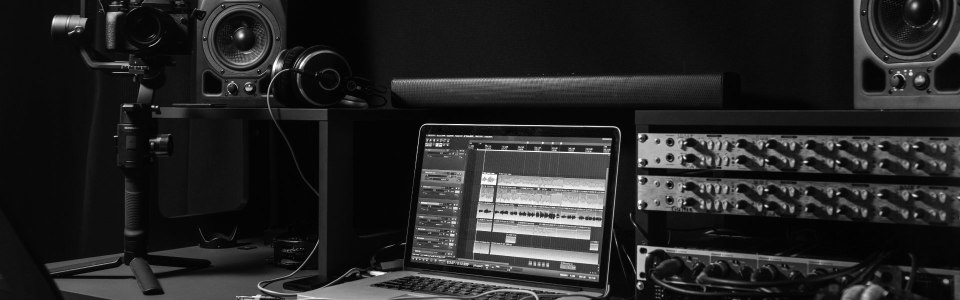
Once the cameras stop rolling and the raw footage lands in our studio, a team of specialised artists gets to work. This is where the magic really begins, transforming hours of material into a polished, powerful final product. Think of it like a symphony orchestra; each service plays a unique part, but they all work together to create something beautiful.
From building the narrative in the edit suite to crafting an immersive soundscape, these creative disciplines are all about bringing a vision to life. Let’s pull back the curtain and look at the five fundamental pillars of postproduction.
Video Editing: The Art of Storytelling
This is the heart of postproduction. Video editing is where the story truly takes shape, one shot at a time. An editor pores over all the raw footage, finding the perfect takes and piecing them together to build the narrative, set the pace, and create the rhythm of the final film.
A great editor is like a sculptor with a block of marble—they take all the raw material from the shoot and carefully chip away, refining and shaping until the story hidden inside is revealed. It’s so much more than just cutting and pasting clips.
This is where sophisticated professional video editing software comes into play, helping our editors manage complex projects. Every decision—when to cut, which angle to use, how long to hold a shot—is designed to provoke an emotional response from the audience. A flurry of quick cuts can build heart-pounding excitement, while a long, steady shot can create a feeling of deep intimacy or unbearable tension.
Colour Grading: Painting with Light and Emotion
Often mistaken for simple colour correction, colour grading is where we define the visual mood and emotional tone of the entire piece. Correction is technical; it’s about making sure colours are accurate and consistent. Grading, on the other hand, is pure artistry.
Imagine a scene in a cosy little café. A colourist can use warm, golden tones to make you feel nostalgic and comfortable. For a corporate thriller, they might lean into cool, desaturated blues and greys to build an atmosphere of suspense and cold professionalism.
This service is absolutely critical for:
- Establishing Atmosphere: Setting the mood for a scene or the entire project.
- Guiding the Eye: Using light and colour to direct the viewer’s focus to key details.
- Brand Identity: Ensuring the visual style aligns with a company’s unique colours and aesthetic.
Sound Design and Mixing: Crafting an Immersive World
They say sound is 50% of the movie-watching experience, and they’re right. A professional postproduction studio invests heavily in sound design and mixing, blending every audio element to create a believable, immersive world for the viewer.
This isn’t just about dialogue and music. It’s about the subtle, almost subconscious sounds that make a scene feel real—the faint hum of a city outside a window, the specific click of a door handle, the rustle of leaves in the wind. The sound mixer then meticulously balances every layer to ensure perfect clarity and emotional punch.
A great sound mix is one you don’t consciously notice, but you absolutely feel. It’s the subtle swell of music that heightens a dramatic moment or the carefully placed silence that amplifies tension just before a reveal.
Visual Effects: Creating the Impossible
Visual Effects (VFX) is all about creating imagery that simply can’t be captured with a camera on set. This could be something subtle, like removing an unwanted logo from the background of a shot, or something spectacular, like creating entire digital worlds, mythical creatures, or massive explosions.
VFX artists are the digital magicians of our industry. They seamlessly blend computer-generated imagery (CGI) with live-action footage to build realities that are both stunning and completely believable. This is the secret ingredient for any project that needs a touch of the extraordinary.
Motion Graphics: Bringing Information to Life
While VFX focuses on photorealism, motion graphics is all about communicating information in a visually engaging way. It involves designing and animating elements like text, logos, charts, and icons to make them dynamic.
You see motion graphics everywhere:
- In the stylish opening titles of your favourite TV show.
- In corporate explainer videos that use moving graphs to break down complex data.
- In adverts where key features are highlighted with slick text and animations.
This service is an invaluable tool for grabbing and holding an audience’s attention, making it a cornerstone of modern video production for businesses and broadcasters alike.
Mapping the Postproduction Workflow From Start to Finish
Once the cameras stop rolling and all that precious footage is safely “in the can,” the project enters its most critical phase. The journey through a postproduction studio isn’t just a series of random tasks; it’s a highly structured process where each step logically builds on the last, ensuring a flawless final product.
Think of it like assembling a high-performance car. You can’t install the sound system before the chassis is built, and you certainly wouldn’t paint it before all the parts are in place. Every professional studio follows a similar roadmap to maintain quality, manage client feedback effectively, and deliver on time.
Stage 1 Ingest and Organisation
First things first: media ingest. This is where all the raw video files, audio recordings, and any other assets from the shoot are carefully transferred to the studio’s secure servers. This is far more than a simple copy-and-paste job. Our team meticulously organises everything into a logical folder structure, creates redundant backup copies, and prepares the footage for editing.
An organised project is an efficient project. This foundational work ensures our editors can find any clip from any camera at a moment’s notice, which saves countless hours down the line. It’s the digital equivalent of organising a workshop before starting a major build.
Stage 2 The Offline Edit
This is where the story truly comes alive. The offline edit is the main creative stage of editing. Here, the editor works with low-resolution copies of the footage, known as “proxies,” which allows the computer system to run much faster and more smoothly. The focus at this point is purely on storytelling, pacing, and selecting the best performances—not technical perfection.
The editor assembles the first version of the project, often called the assembly cut, which is typically long and unrefined. This is then tightened into a rough cut and eventually a fine cut, with each version getting progressively closer to the final narrative. This is a highly collaborative process, involving regular feedback loops with the client to make sure the story is hitting all the right notes.
If postproduction is like building a custom car, the offline edit is where you construct the chassis and install the engine. It defines the core structure, performance, and fundamental shape of the vehicle before any of the finishing touches are added.
Stage 3 The Online Edit and Picture Lock
Once the client gives final approval on the offline cut, we hit a crucial milestone known as picture lock. This means no more changes to the timing or story will be made. The editor then begins the online edit, which involves replacing all the low-resolution proxy files with the original, high-quality footage from the cameras.
During this stage, the team shifts focus to the technical details:
- Conforming: The process of relinking the edit to the high-resolution source files.
- Visual Effects (VFX): Integrating any CGI or digital enhancements into the final shots.
- Graphics and Titles: Adding motion graphics, title cards, and lower thirds.
This phase is all about making sure the visual components are technically perfect and ready for the final polishing stages. For a deeper dive into the specific tools and techniques we use, you can explore our guide on technical video production, which covers the powerful hardware and software behind this process.
Stage 4 Colour and Sound Finishing
With the picture locked and conformed, the project moves to two parallel departments for finishing touches. The colourist takes the final edit and begins the colour grading process, meticulously painting the emotional tone of every scene and ensuring everything looks visually consistent.
At the same time, our sound design team gets to work on the audio. This involves several key tasks:
- Dialogue Editing: Cleaning up all spoken words for maximum clarity and impact.
- Sound Design: Adding atmospheric sounds and effects to build an immersive world.
- Music Scoring: Placing the final musical score to drive the emotion.
- Final Mix: Balancing every audio element—dialogue, effects, and music—into one cohesive, perfect blend.
These two processes are what transform a technically complete video into an emotionally resonant experience.
Stage 5 Mastering and Delivery
Finally, the finished picture from the colourist and the final mix from the sound team are brought together in a process called mastering. Our team creates the final, high-resolution master file, which becomes the definitive version of the project.
From this master file, the studio will then create all the required deliverables—the different versions of the video formatted for various platforms. This could include a high-bitrate version for television broadcast, a compressed version for YouTube, and vertically formatted clips for social media, ensuring the content looks and sounds its best on every single screen.
How to Choose the Right Postproduction Partner
Picking the right postproduction partner is easily one of the most critical decisions you’ll make for any project. The right studio doesn’t just tick boxes on a to-do list; they bring your creative vision to life, anticipate problems you haven’t even thought of yet, and truly become a part of your team. It’s about looking past the price tag to find a genuine collaborator.
Ultimately, you’re searching for a partner whose expertise, communication style, and technical setup are a perfect match for what your project demands. This single choice has a direct line to the quality, impact, and overall success of the final piece.
Evaluate Their Portfolio and Expertise
Your first stop should always be a deep dive into the studio’s past work. A flashy showreel is a nice introduction, but you need to dig deeper for real proof that they have the specific experience your project needs. Don’t just get wowed by big-name clients; look for a creative and technical connection.
As you look through their portfolio, ask yourself these questions:
- Industry Relevance: Have they worked with clients in your field, whether it’s tech, healthcare, or finance? If so, they’ll already get the small details of your audience and message.
- Creative Alignment: Does their visual style click with your brand’s own look and feel? Search for projects that have a similar tone to what you’re trying to create.
- Problem-Solving Skills: Do you see examples where they’ve tackled tough challenges? Look for projects with complex visual effects or sophisticated storytelling that show off what they can really do.
For example, the creative services an explainer video agency provides for a tech startup demand a completely different skillset than a broadcast commercial for a luxury brand. A strong portfolio will make this kind of specialised experience obvious.
This process flow gives you a clear picture of the core stages where you and the studio will be working closely together.
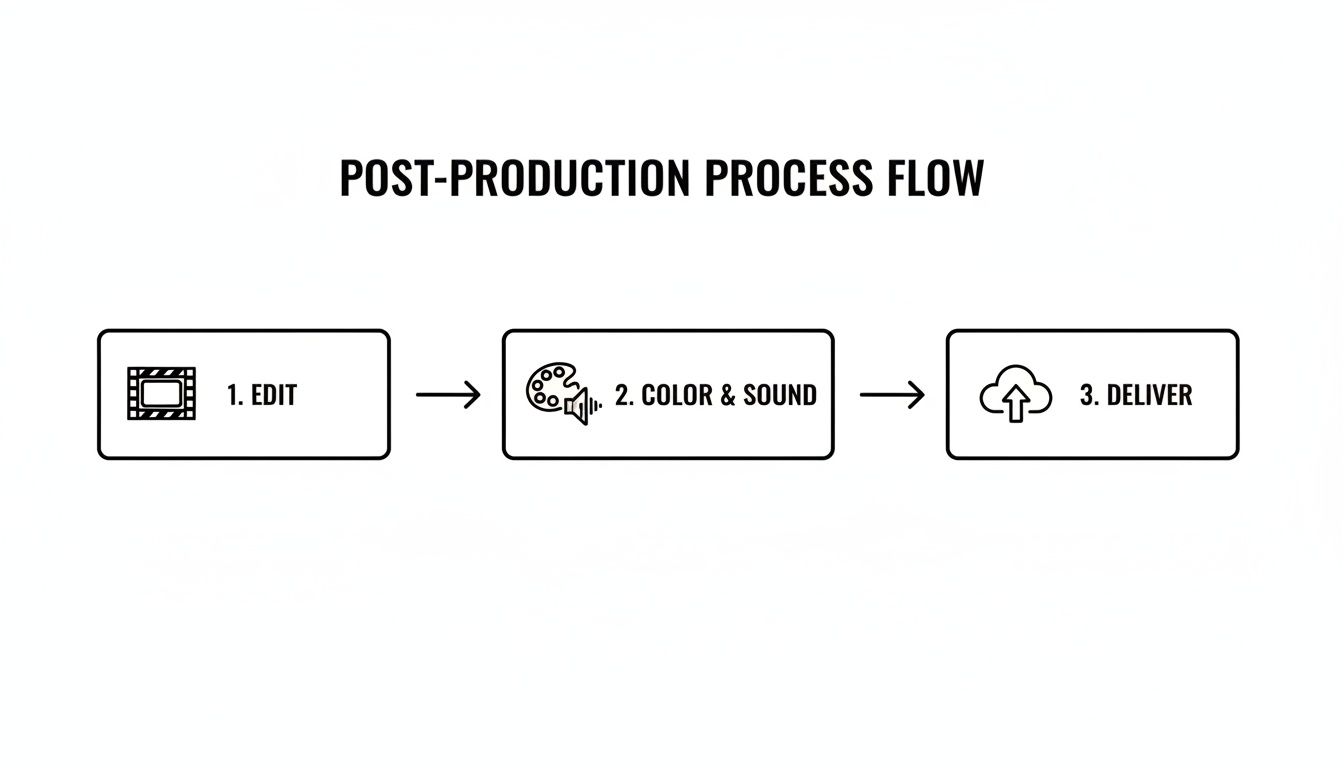
This visual guide breaks down the journey from raw footage to the final polished video, highlighting the key phases of editing, colour and sound, and final delivery.
Assess Communication and Project Management
Even the most brilliant artists can’t deliver without a solid process for communication. A top-tier postproduction studio should make you feel supported and in the loop from start to finish. How they handle feedback, stick to deadlines, and keep you updated is every bit as important as their creative talent.
A partnership with a postproduction studio is a dialogue. The best results come from transparent, consistent communication where creative ideas and constructive feedback can flow freely in both directions.
Before you sign anything, get a clear sense of their workflow. How do they manage client reviews and handle revisions? Do they have a specific project management tool to keep track of progress and notes? The answers will tell you a lot about how organised and client-focused they really are.
Inquire About Their Technical Infrastructure
The technology a studio runs on is the engine that powers the creative work. You need a partner with the right hardware, software, and security to manage your project efficiently and keep your files safe. A solid infrastructure is what prevents technical delays and ensures your valuable assets are protected.
Here are a few essential questions you should ask any potential postproduction studio:
- What editing and effects software do you specialise in? (e.g., DaVinci Resolve, Adobe Creative Suite, Avid)
- How do you manage data backup and security for client assets?
- What is your process for handling different delivery formats and technical specifications?
- Can you show us a project with similar creative or technical challenges?
When you find a partner who can answer these questions with confidence, it’s a great sign you’re in capable hands. They won’t just be a vendor; they will be the dedicated creative team that brings your vision to the screen with precision and style.
Decoding Technical Specs and Final Deliverables
Once all the creative magic is done, the final, crucial step is getting the project ready for its audience. This is where the technical details really matter, ensuring your video looks and sounds absolutely perfect on every screen—from a huge cinema display right down to a mobile phone. Getting your head around these final specs is the key to a smooth delivery.
Think of it like publishing a book. You have the final, edited manuscript—that’s your master file. But that manuscript needs to be formatted differently for a hardcover, a paperback, and an e-book. In the same way, your video needs different versions, each one perfectly optimised for its specific destination.
Mastering the Master File
Everything starts with the master file. This is the single highest quality version of your finished project, born from combining the final colour-graded picture with the final, polished sound mix. It’s a massive, uncompressed file that acts as the ultimate source from which every other version is created.
Typically, a master file is rendered in a top-tier format like ProRes 4444. This format holds on to the maximum amount of colour and image data possible, making it the perfect digital archive of your work. Every other file you get from us is a direct descendant of this pristine original.
Understanding Key Technical Terms
Diving into the world of deliverables means you’ll bump into some technical jargon. Any professional postproduction studio will walk you through it, but knowing the basics helps you explain exactly what you need.
Here are the most common specs you’ll come across:
- Codec (Compressor/Decompressor): This is the tech used to shrink down massive video files. Common codecs include ProRes, which is a favourite for editing and mastering because of its high quality, and H.264 or H.265, which are the workhorses for online streaming thanks to their excellent compression.
- Resolution: This is simply the number of pixels in the image, which determines how sharp and clear it looks. Standard resolutions are 1920×1080 (Full HD) and 3840×2160 (4K UHD).
- Aspect Ratio: This just means the shape of the video frame. The standard for TV and YouTube is a wide 16:9, while social media platforms often demand vertical formats like 9:16 or a perfect square (1:1).
- Frame Rate: This is how many individual pictures, or frames, are shown every second (fps). Film has a classic, cinematic feel at 24fps, while broadcast television in Europe typically uses 25fps.
The choice of codec, resolution, and frame rate isn’t random. It’s a calculated decision based on where the video will be seen, balancing file size against visual quality to give your audience the best possible viewing experience on that specific platform.
From One Master to Many Deliverables
A single project almost always needs multiple versions for different channels. For instance, a corporate brand film might need a whole suite of distinct outputs. To make sure your final product works everywhere, it’s vital to understand common video file formats.
Your final delivery package could easily include:
- Broadcast Version: A high-bitrate file with specific audio layouts, built to meet the very strict technical standards of television networks.
- YouTube/Vimeo Version: An H.264 file, perfectly optimised for high-quality streaming on web platforms.
- Social Media Clips: Several short, vertically formatted (9:16) versions for things like Instagram Stories, Reels, or TikTok, often with subtitles burned in for silent viewing.
Each one of these files is carefully crafted from that original master, making sure your message is delivered with maximum impact, no matter where your audience is watching.
Why a Professional Studio Is a Smart Investment
Trying to handle post-production yourself might look like a good way to cut costs, but it’s often a classic case of false economy. The gap between what you can do with off-the-shelf software and what a professional postproduction studio can achieve is enormous. It’s not just about the gear; it’s about the expertise, efficiency, and quality control that make or break a project.
Bringing a professional team on board is a direct investment in your project’s final impact. It’s the crucial step that takes a solid idea and transforms it into a powerful, polished, and compelling story that truly connects with your audience.
The Value of Creative Expertise and Efficiency
A professional studio brings much more than just expensive equipment to the table. You get a team of specialised artists who live and breathe storytelling every single day. An experienced editor can see narrative threads you might have missed, while a skilled colourist understands the subtle psychology of colour that can completely change a scene’s emotional tone.
This kind of collaborative environment makes the whole process smoother and faster. For an advertising agency on a tight deadline, it means getting broadcast-ready files that meet precise technical specs without any costly delays. For a corporation, it ensures their brand film has that premium look and feel, reinforcing their position in the market. We explore this creative partnership in more detail in our guide to marketing with video.
Investing in a professional studio isn’t just about renting equipment; it’s about hiring a dedicated creative partner whose entire focus is on realising your vision to the highest possible standard. It’s the difference between simply finishing a project and launching it with genuine impact.
Mitigating Risks and Ensuring Quality
Professional studios also serve as an essential quality assurance checkpoint. They follow strict workflows for data management, backups, and technical checks that protect your project from disastrous data loss or formatting mistakes. That reliability is key to keeping a project safe and moving forward.
This structured approach is especially valuable in a shifting economy. While Poland’s industrial output saw a minor contraction of 1.1% year-on-year by November 2025, long-term forecasts remain stable, showing the resilience of key sectors like the creative industries. In this kind of market, investing in guaranteed quality and efficiency becomes a strategic advantage that makes your content stand out. You can see more analysis on Poland’s industrial production trends on tradingeconomics.com.
Ultimately, working with a professional studio removes the guesswork. You gain access to a team whose collective experience has been built over hundreds of projects. They know how to anticipate challenges, solve problems creatively, and deliver a final product that doesn’t just meet your expectations, but exceeds them. This expertise is what ensures your investment pays off, delivering a powerful return through exceptional quality.
Frequently Asked Questions About Postproduction
Stepping into the world of a professional postproduction studio can bring up a lot of questions, especially if you’re new to the process. To pull back the curtain a bit, we’ve put together answers to some of the most common queries we get about timelines, budgets, and the creative back-and-forth.
Our goal is to make our work less of a mystery and help you feel confident and ready to go when you kick off your next project.
How Long Does Postproduction Usually Take?
There’s no magic number here—the timeline is always shaped by the project’s complexity. A straightforward corporate interview might be polished and delivered in just a few days, whereas a commercial loaded with visual effects could take several weeks or even months to get just right.
A few key things will always influence the schedule:
- The sheer volume of raw footage we need to sort through and organise.
- How intricate the edit is, including how many rounds of feedback and changes are needed.
- The depth of colour grading, sound design, and motion graphics required to complete the vision.
We always map out a detailed schedule before we start, so you’ll know exactly what to expect from day one.
How Are Project Budgets Determined?
A postproduction budget is simply a breakdown of the time and expertise each service requires. It’s never a one-size-fits-all cost; it’s a careful calculation based on your project’s specific creative and technical demands.
For instance, a project that needs extensive 3D animation will look very different from one focused mainly on editing and colour grading. We provide a completely transparent, itemised quote that breaks down the costs for each stage, from the initial assembly edit to the final master files. This way, there are no surprises, and you can see precisely where your investment is going.
A clear brief is the single most powerful tool for keeping a budget and timeline in check. The more specific you can be about your vision, your audience, and the deliverables you need, the more accurately we can plan the resources to bring it all to life.
 English
  Polish
  German