
How to Choose an Explainer Video Agency You Can Trust
An explainer video agency is your creative partner, turning complex products, services, or ideas into clear, short, and engaging videos. They handle the entire production from start to finish—scripting, storyboarding, animation, and sound—to build a powerful marketing asset for your business.
What Is an Explainer Video Agency and Why Do You Need One?
Think of an explainer video agency as a specialised architect for your brand’s message. They don’t just put together a video; they design and build a communication tool that bridges the gap between your complex idea and your audience’s understanding. This is what they do best: turning abstract concepts into tangible, compelling stories that get people to act.
Unlike a freelancer who might only be great at animation, or an in-house team juggling a dozen other priorities, a dedicated agency brings a focused, multidisciplinary team to your project. This team usually includes:
- Strategists to make sure the video’s message aligns perfectly with your business goals.
- Scriptwriters who know how to craft a narrative that’s both clear and captivating.
- Animators and designers who create the visual world of your story.
- Project managers who keep everything running smoothly, on time, and on budget.
The Strategic Value of an Expert Partner
Hiring an explainer video agency isn’t just about outsourcing a task; it’s about gaining a strategic partner. They bring a fresh perspective, helping you see your product through the eyes of a potential customer for the first time. An explainer video agency acts as a specialist within the wider world of video marketing, with a laser focus on effective visual storytelling.
Their expertise ensures the final video isn’t just a pretty animation but a purpose-built tool designed to hit specific business targets. For instance, a well-made explainer can boost landing page conversion rates by making your value proposition crystal clear in under 90 seconds. To learn more about how videos achieve these goals, feel free to explore our detailed guide on marketing with video.
The true value of a professional agency lies in their ability to synthesise marketing strategy, creative storytelling, and technical execution. They transform a complex brief into a simple, effective asset that works for your brand 24/7.
To give you a clearer picture, let’s break down the key differences between going with an agency and trying to manage it yourself.
Agency vs DIY Video Production Quick Comparison
| Aspect | Explainer Video Agency | In-House or Freelancer |
|---|---|---|
| Expertise | A full team of specialists: strategists, writers, animators, and sound designers. | Limited to the skills of one person or a small, non-specialised internal team. |
| Strategy | Video concept is deeply integrated with marketing goals and audience analysis. | Often focuses purely on the visual execution without a strong strategic foundation. |
| Process | Proven, streamlined process from concept to final delivery. One point of contact. | Can be disjointed. You’ll have to manage multiple freelancers or internal workflows. |
| Quality | High, consistent professional quality backed by a portfolio and industry experience. | Quality can be inconsistent and often lacks a professional polish. |
| Time Investment | Minimal time required from you. The agency handles all the heavy lifting. | Requires significant time for project management, feedback, and coordination. |
| Cost | Higher initial investment, but often delivers a better ROI through effective results. | Lower upfront cost, but risks a final product that doesn’t perform, wasting the investment. |
Ultimately, partnering with an agency removes the immense burden of managing a complex creative project. Instead of trying to coordinate multiple freelancers or stretching your internal team thin, you get a single point of contact responsible for delivering a high-quality, results-driven video. It’s a streamlined approach that saves you time and resources while guaranteeing a professional outcome that connects with your audience and elevates your brand.
Exploring the Different Types of Explainer Videos
Choosing the right video style is a bit like picking the right tool for a job. You wouldn’t use a hammer when you need a screwdriver, and the same logic applies here. Every explainer video format has its own unique strengths. A seasoned explainer video agency is your guide, helping you land on the perfect style that fits your message, speaks to your audience, and feels true to your brand.
Getting familiar with these formats yourself is a huge advantage. It helps you clarify your own vision and makes collaborating with a creative partner that much smoother. The main styles you’ll come across are 2D animation, 3D animation, motion graphics, and live-action. Each one offers a completely different way to tell your story.
2D Animation: The Versatile Storyteller
Think of 2D animation as the classic language of storytelling that everyone understands. It uses flat, two-dimensional characters and settings to build narratives that are both engaging and incredibly easy to follow. It’s a wonderfully versatile style, perfect for breaking down abstract services or showing a software platform in action without getting too technical.
The real power of 2D animation is its ability to focus the viewer’s attention squarely on the message. By stripping away real-world distractions, it makes complex ideas feel simple and clear. To see just how far you can take it, you can explore the various types of animation in our detailed guide.
3D Animation: The Premium Product Showcase
When you need to show off a physical product with real depth, detail, and a touch of class, 3D animation is your best bet. It brings a layer of realism and sophistication that 2D just can’t replicate, making it ideal for technical, medical, or engineering products where every angle and tiny component is crucial.
Imagine demonstrating a complex medical device or giving a virtual tour inside a new piece of machinery. 3D animation makes these objects tangible, allowing viewers to see them from all sides and understand how they work. This style sends a strong signal of quality and innovation, instantly elevating how people see your brand.
Motion Graphics: The Data Visualiser
Motion graphics are the masters of turning abstract information into something concrete and dynamic. This style uses animated text, shapes, and charts to bring data, processes, and concepts to life. It’s less about characters and narrative and more about visualising information with energy and style.
Motion graphics transform dull statistics and complex workflows into compelling visual journeys. They are perfect for financial reports, process explanations, or any message that relies on data to make a powerful point.
A company could use motion graphics to illustrate market growth or break down a multi-step service process into something anyone can understand. The fluid movement and clean designs grab attention and make the information stick. This has become an increasingly popular style within the Polish creative sector. In fact, the Polish animation and video-production market, a key supplier for agencies, reached a value of approximately USD 2,736.33 billion in 2024 and is expected to grow, reflecting a rising demand for high-quality animated work. Learn more about the growth of the Poland animation market.
Live-Action: The Human Connection
At the end of the day, sometimes the best way to connect with your audience is through a human face. Live-action explainer videos use real actors, real locations, and real situations to build trust and authenticity. This style is incredibly effective for customer testimonials, brand origin stories, or any service that depends on human interaction.
Seeing a real person use your product or hearing a customer share their success creates an immediate emotional connection. It grounds your brand in reality and makes your message far more relatable. While production can be more complex, the authenticity it delivers is often irreplaceable when it comes to building brand loyalty.
The Production Journey From Concept to Completion
A great explainer video doesn’t just appear out of thin air; it’s the result of a structured, collaborative process. Think of it like building a custom home. You wouldn’t just start laying bricks without a detailed blueprint, and a professional explainer video agency won’t start animating without a solid strategic foundation. This journey ensures every creative decision is intentional and directly tied to your business goals.
Understanding this production roadmap demystifies the entire process, giving you clear insight into what to expect at each milestone. It turns what could be an overwhelming creative task into a manageable, step-by-step collaboration. From the initial idea to the final polished asset, a full-service agency guides you through these key stages, ensuring transparency and alignment every step of the way.
Stage 1: Discovery and Strategy
This is the most crucial phase, where the project’s entire foundation is laid. Before a single word is written or a sketch is drawn, the agency needs to dive deep and understand your world. This means getting to grips with your business, your target audience, your unique value proposition, and the specific problem this video needs to solve.
Key activities during this phase include:
- Defining Objectives: Are you trying to boost landing page conversions, cut down on support tickets, or build brand awareness? Clear, measurable goals will steer every decision that follows.
- Audience Profiling: Who are you actually talking to? Understanding their pain points, what drives them, and what they already know is essential for crafting a message that truly connects.
- Core Message Distillation: The agency works with you to boil down your complex idea into a single, compelling message that can be powerfully communicated in 60-90 seconds.
Stage 2: Scriptwriting and Storyboarding
With a clear strategy locked in, the creative work begins. The script is the very soul of your explainer video. A professional scriptwriter will craft a narrative that isn’t just informative but also emotionally engaging, using a tone of voice that perfectly reflects your brand. The goal is a concise, powerful story that hooks the viewer from the first second and leads them to a clear call to action.
Once the script is approved, it’s time for the storyboard. This is the visual blueprint for your video. A storyboard is a sequence of drawings, scene by scene, that maps out the visual narrative, character actions, and key transitions. It’s the first time you get to “see” your video, allowing you to give feedback on the visual direction before the more costly animation phase begins.
The infographic below shows the core flow from initial discovery to the final animation.
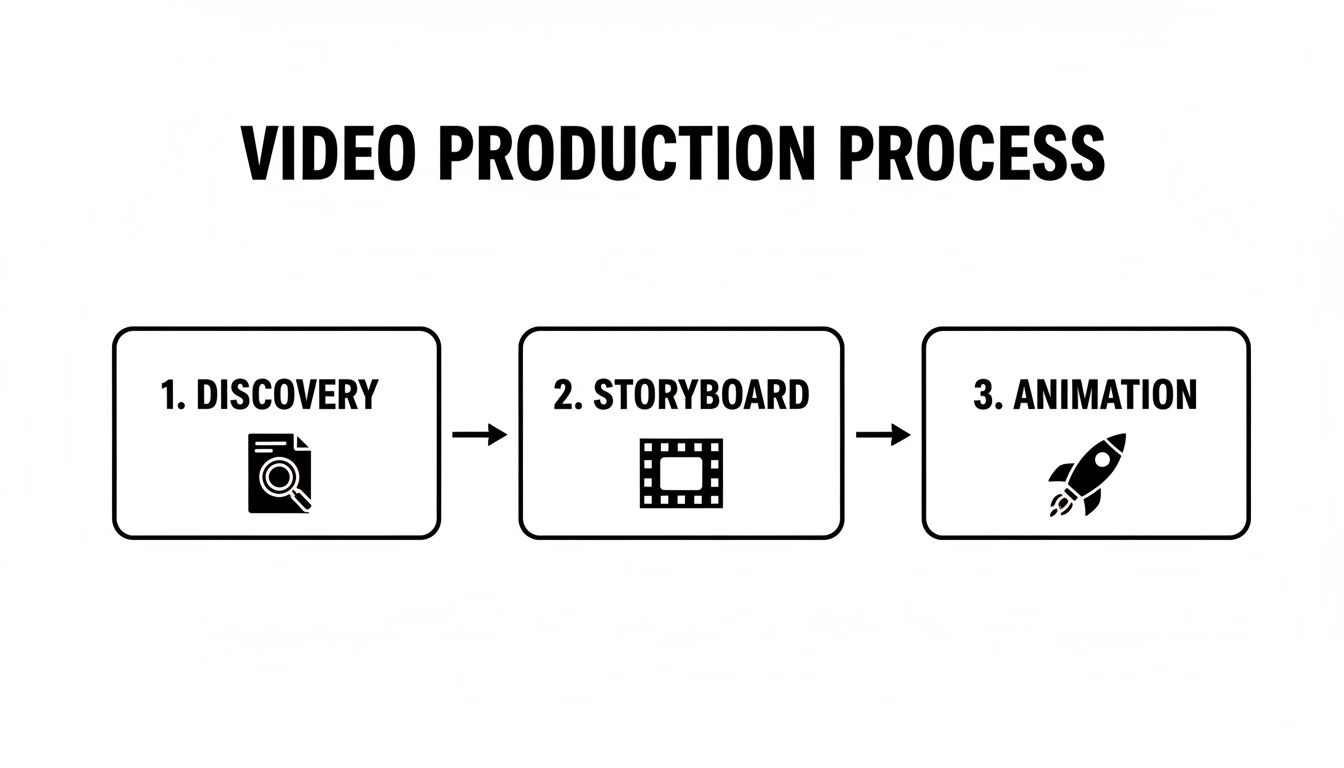
This visual flow highlights how each stage builds on the last, ensuring a cohesive and strategically-aligned final product.
Stage 3: Animation and Post-Production
This is where the magic really happens and your vision comes to life. Working from the approved storyboard, skilled animators begin the meticulous process of creating the visuals. This could be 2D character animation, sleek 3D product models, or dynamic motion graphics. This phase is often the most time-intensive part of the entire journey. For a deeper look into the technical stages, our guide on the animation production pipeline offers a comprehensive breakdown.
After the animation is complete, the project moves into post-production. This final stage involves several key elements that polish the video into a professional marketing asset:
- Voiceover Recording: A professional voice artist records the script, making sure the tone and pacing match the visuals perfectly.
- Sound Design and Music: Sound effects are added to bring the animation to life, and a music track is chosen to set the emotional tone. Understanding your options for background audio, such as what is royalty-free music, is crucial for both creative choice and legal compliance.
- Final Polish: All the elements—visuals, voiceover, and sound—are mixed together. Colour correction and final edits are made to ensure a seamless and impactful viewing experience.
By the end of this journey, you’re left with more than just a video. You have a strategically crafted, high-quality asset ready to engage your audience and achieve your business objectives.
Key Criteria for Selecting the Best Explainer Video Agency
Choosing the right creative partner is probably the biggest decision you’ll make for your video project. The market is packed with options, and knowing what to look for can be the difference between a smooth, successful collaboration and a costly headache. A top-tier explainer video agency isn’t just a group of animators; they become an extension of your marketing team, invested in your success.
This means you have to look past the flashy sales pitches. You need a solid checklist to weigh potential partners on the things that actually matter: the quality of their past work, how they manage a project, their communication style, and whether they truly understand your industry.

Assess Their Portfolio for Quality and Relevance
An agency’s portfolio is more than a highlight reel—it’s hard evidence of what they can do. Don’t just watch a few videos and call it a day. Dig in and analyse them. Is the quality consistent across different animation styles, from clean 2D character work to intricate 3D models?
More importantly, look for relevance. Has the agency produced videos for businesses in your field, whether that’s SaaS, healthcare, or finance? An agency that already speaks your industry’s language will grasp complex ideas much quicker and craft a message that actually connects with your audience. You can explore our portfolio to see exactly how we’ve adapted different styles to hit the mark for a wide range of industries.
Examine Their Production Process
A clearly defined production process is the foundation of any successful project. It creates transparency, sets clear expectations, and keeps everything moving forward without delays or surprises. The best agencies will happily walk you through a documented workflow covering every stage, from the initial discovery call and scriptwriting to storyboarding, animation, and final delivery.
A transparent and collaborative process isn’t a “nice-to-have”—it’s a non-negotiable. It signals that the agency values your input, respects your time, and is organised enough to handle complex creative projects without chaos.
Ask potential partners to explain their process. Who will be your day-to-day contact? How do they handle feedback and revisions? A structured, clear approach is a massive indicator of their professionalism and reliability.
Prioritise Clear and Responsive Communication
Good communication is the glue that holds any creative partnership together. From your very first email or call, pay attention to how responsive, clear, and proactive the agency is. A great partner listens to understand your goals, asks smart questions, and explains their process without hiding behind jargon.
If communication feels slow or vague from the start, consider it a major red flag. An agency that is slow to respond or doesn’t seem genuinely interested in your project now is unlikely to change once the contract is signed. That first impression often tells you everything you need to know about the working relationship to come.
Verify Their Industry Expertise and Specialisation
While a versatile agency has its merits, specialised expertise can be a true game-changer. If you’re marketing a complex medical device or a highly technical software platform, you need an agency that has been there before. They’ll already know the terminology, the audience’s pain points, and the regulatory hurdles, which can save you countless hours of back-and-forth.
For example, the Polish animation market has a dynamic structure with about 15 leading studios and another 15 strong contenders among over 70 companies. Pricing reflects this, ranging from USD 25–49 per hour for smaller teams to USD 100–149 per hour for larger Warsaw-based agencies. This shows why finding a partner whose expertise and scale align with your needs is so important. This kind of specialisation ensures the final video is not only beautiful but also technically accurate and strategically sharp.
Getting to Grips with Explainer Video Pricing and Budgeting
Any conversation about working with a creative partner eventually comes down to one big question: what’s it going to cost? The truth is, there’s no simple, one-size-fits-all price tag for an explainer video. Think of it less like an off-the-shelf product and more like a bespoke suit—the final cost is a direct reflection of the creative energy, technical skill, and strategic thinking that goes into crafting a powerful communication tool for your brand.
By understanding the key factors that shape the final price, you can set a realistic budget and truly appreciate the value you’re getting back. The biggest cost drivers are always tied to the complexity of the work and the time it takes to get it done right. Any professional explainer video agency will be happy to give you a transparent breakdown based on these core variables.
Key Factors Driving the Cost of a Video
A few key elements determine the overall budget for an animated explainer. Each one adds to the hours and expertise needed to bring your vision from a mere idea into a living, breathing animation.
- Animation Style: A straightforward 2D animation with simple characters and backgrounds will naturally be less of an investment than a complex 3D animation, which demands intricate modelling, texturing, and lighting work.
- Video Length: It’s simple maths—the longer the video, the more work is required for scripting, storyboarding, and animating each frame. Most explainers are kept to a punchy 60-90 seconds to hold the audience’s attention and keep costs in check.
- Design Complexity: A video featuring custom-designed characters, detailed environments, and slick, fluid transitions requires a whole lot more artistic and technical heavy lifting than one using simpler, more stylised graphics.
- Turnaround Time: Need it yesterday? Urgent projects that require an agency to reshuffle their schedule and throw extra resources at it will understandably come at a premium compared to projects with a standard, more relaxed timeline.
It’s crucial to shift your perspective from cost to value. A top-tier explainer video isn’t just a one-off expense. It’s a strategic investment—a long-term asset that will clarify your value proposition, drive conversions, and deliver a tangible return for years to come.
Typical Pricing Tiers and What You Can Expect
To give you a clearer picture, we can group explainer video pricing into a few general tiers. While the exact figures will vary from one agency to another, these ranges give you a good sense of what different budgets can achieve.
A basic tier might get you simple 2D motion graphics, perhaps with a more template-driven feel. This is often a good fit for internal comms or startups working with very tight constraints. Moving up to the mid-tier, you’re looking at fully custom 2D animation, a professional voiceover, and a much more polished final product. At the premium tier, you’re in the realm of high-end 3D animation, advanced visual effects, and a deeply strategic approach to storytelling, perfect for major brand campaigns.
The demand for high-quality video is only going up. In Poland, for instance, spending on digital video advertising is on track to hit around USD 1.37 billion by 2025. This massive investment in video creative is a huge driver for the growth of local agencies. You can explore more data on Poland’s video advertising market to see just how brands are putting their money to work.
At the end of the day, the goal is to find an agency that hits that sweet spot of quality, expertise, and cost for your specific needs. The most effective video isn’t always the most expensive one; it’s the one that tells your story perfectly and smashes your business goals.
Still Have Questions About Explainer Videos?
Diving into your first explainer video project can feel a bit like exploring new territory. It’s natural to have questions, and getting them answered is the best way to move forward with confidence and build a great partnership with an explainer video agency.
We’ve gathered some of the most common questions businesses ask before they start. Think of this as your practical guide to demystifying the whole process, helping you line up your expectations and have more meaningful conversations with potential creative partners right from the get-go.
How Long Does Production Usually Take?
Generally, you can expect a high-quality explainer video to take anywhere from 6 to 12 weeks from start to finish. Of course, this isn’t set in stone. The final timeline really depends on a few things, like the complexity of the animation (2D is often quicker than 3D), the video’s length, and how promptly you can provide feedback at each stage.
A professional agency will kick things off with a detailed production schedule. This roadmap clearly lays out all the key milestones—script approval, storyboarding, animation, and final delivery—so everyone knows what’s happening and when.
What Do I Need to Provide to Get Started?
To hit the ground running, the single most valuable thing you can bring to the table is a clear project brief. Don’t worry, the agency is there to help flesh it out, but your initial thoughts are absolutely vital.
Your brief should cover the basics:
- Your Core Goals: What’s the main job of this video? Is it to boost conversions, cut down on support tickets, or something else?
- Target Audience: Who are we talking to? What keeps them up at night?
- Key Messages: If a viewer remembers only one or two things, what should they be?
- Brand Guidelines: Your specific colours, fonts, and the overall voice of your brand.
While the agency’s discovery phase is built to dig deeper into these points, starting with a solid brief makes the whole project smoother for everyone.
How Is the Success of a Video Measured?
This is a great question, and the answer goes right back to the goals you set at the very beginning. Success isn’t about chasing vanity metrics like view counts; it’s about achieving real business outcomes.
Success isn’t a vanity metric; it’s a business result. Whether it’s a higher conversion rate or fewer confused customers, the best videos are measured by the problems they solve.
We typically track key performance indicators (KPIs) like a jump in conversion rates on a landing page, better user engagement on social media, people spending more time on your site, or a clear increase in qualified leads.
Can the Video Be Updated in the Future?
Absolutely. Videos can often be updated, but how easy—and costly—it is depends entirely on what needs changing. Simple tweaks like updating text, swapping a logo, or adjusting a colour are usually quick and won’t break the bank.
On the other hand, if you need to make significant changes to the animation itself, like altering a character’s entire movement or adding a brand new scene, it can be almost as much work as creating it from scratch. It’s always a smart move to chat about potential future updates with your agency upfront so they can plan the project files accordingly.
Ready to turn your complex ideas into a clear, compelling story? Simple Frame specialises in creating high-quality animated explainer videos that deliver real business results. Let’s discuss your project today.