
How to Hire a Digital Animation Agency for Startups
A digital animation agency is more than just a creative vendor; for a startup, it's a strategic partner that turns complex ideas into compelling visual stories. This isn't about making pretty videos. It's about forging a powerful communication tool that can boost conversions, lock in funding, and build an unforgettable brand identity right from the start.
Why Your Startup Needs a Digital Animation Agency

Startups are in a brutal fight for attention. You need to explain what you do and why it matters, and you need to do it fast. Animation slices through the noise with incredible efficiency, making abstract software concepts, intricate hardware, or complex services feel tangible and exciting. This is a fundamental tool for growth, not just marketing fluff.
Think about it. How many times have you struggled to explain your product to an investor or a potential customer? An animation delivers that perfect pitch, every single time. It carries a consistent, clear, and emotionally resonant message in a way that plain text or even live-action video often can't match.
The Strategic Edge Animation Provides
When you're a startup, every pound spent has to work hard for you. Bringing a specialised agency on board gives you a few key advantages that directly feed your bottom line and strengthen your market position.
- Clarifies Complexity: Animation makes the invisible visible. It's perfect for tech, SaaS, or biotech startups that need to show, not just tell, how their solution works.
- Boosts Engagement: Animated content gets shared. It holds attention. That translates to better performance on your landing pages and across social media.
- Enhances Brand Recall: A unique animation style carves out a memorable brand identity, helping you stand out even when you're up against established competitors.
Hiring a digital animation agency is a smart way to outsource highly specialised creative work. This strategic move frees up your team to focus on building the business while storytelling experts get to work. If you want to dive deeper into this approach, this guide to outsourcing creative services is a great resource.
The global animation market is projected to exceed £587 billion by 2030, with the 3D animation segment holding an estimated 56.7% market share. This isn't just a trend; it's a fundamental shift in how businesses are choosing to communicate complex ideas.
Ultimately, a strong animated brand video becomes a cornerstone asset. You can slice it, dice it, and repurpose it across every marketing channel you have, from your website homepage to your crucial investor deck.
Defining Your Animation Goals and Budget
Before you even start looking for a digital animation agency, you need a clear roadmap. It’s a common mistake to jump straight into the creative side, but without defined goals, you’re asking a partner to guess what success looks like for you. That path often leads to mismatched expectations, wasted cash, and a final video that doesn’t actually help your business.
So, start with one fundamental question: What specific problem is this animation meant to solve? The answer to this will shape every single decision that comes next, from the creative concept all the way to the final call-to-action. You have to get past vague ideas like "making a cool video" and lock down a measurable objective. This clarity is your single most powerful tool when you start talking to agencies.
Set Your Key Performance Indicators
Think about what a successful outcome really means for your startup. Is it about slashing your customer acquisition cost? Boosting conversions on a key landing page? Maybe it's something else entirely. A fintech startup, for instance, might need a 60-second explainer video to bump up app sign-ups by 15%. On the other hand, a deep-tech company might require a detailed 3D visualisation to help secure its next funding round by clearly showing investors how a complex process works.
Your goals could be to:
- Increase conversion rates on a crucial landing page.
- Reduce the volume of support tickets by explaining a common user issue.
- Improve lead quality by using the animation to pre-qualify prospects.
- Build brand affinity with engaging storytelling on your social channels.
Navigating the Budget Conversation
Once your goals are crystal clear, it’s time to talk money. Animation costs can swing wildly, so it's vital to understand what drives the price. Trying to set a budget without knowing the basics is a recipe for frustration.
To help you get started, here’s a quick guide to how different animation types stack up for startups.
Animation Project Budgeting Guide for Startups
This table breaks down common animation styles, where they fit best for a growing business, and what factors really move the needle on cost.
| Animation Type | Best Use Case for Startups | Primary Cost Factors |
|---|---|---|
| 2D Motion Graphics | Explainer videos, social media ads, UI/UX demos. | Length, complexity of motion, custom illustrations vs. stock assets. |
| Character Animation | Brand storytelling, educational content, onboarding tutorials. | Character design complexity, number of characters, lip-syncing, fluid movement. |
| Whiteboard Animation | Explaining processes or concepts, internal training. | Illustration detail, speed of animation, voiceover and sound design. |
| 3D Animation | Product visualisations, medical/technical demos, high-impact marketing. | Model complexity, texturing, lighting, rendering time, photorealism. |
| Stop Motion | Unique social content, memorable brand ads. | Physical set/prop creation, frame-by-frame shooting time, post-production. |
Ultimately, the main cost drivers are the animation style, its length, and its overall complexity. A simple 2D motion graphics piece is always going to be more budget-friendly than a photorealistic 3D product rendering. Startups often find their sweet spot with high-quality 2D animation, as it strikes a great balance between visual impact and cost. If you want to dive deeper into this, our guide on finding an affordable 2D animation studio for small businesses is packed with practical advice.
A well-defined budget isn't a limitation; it’s a creative constraint that helps an agency propose the most effective solution within your means. Being upfront about your financial parameters allows a good partner like Simple Frame to tailor a proposal that maximises your return on investment.
Be transparent about your budget range when you reach out. A professional team will respect that and work with you to find a solution that hits your main goals without any unnecessary fluff. Kicking off the conversation with this kind of honesty sets the stage for a great partnership built on trust and a shared understanding of what’s possible.
Looking at Portfolios and Checking Technical Skills
Finding the right digital animation agency means going way beyond their slickest showreel. A portfolio is your first real window into what an agency can do, but you have to look deeper than just pretty pictures. What you're really searching for is proof of strategic thinking. Does their work actually feel like it belongs to the brands they’re representing, or does every video have the same generic vibe?
The best portfolios show range. You want to see examples that prove they get that different business goals need different creative approaches. For instance, a short, punchy animation built for a TikTok campaign serves a totally different purpose than a detailed product demo video for a serious B2B buyer. An experienced agency knows this inside and out.
2D vs. 3D Animation: What's the Difference?
One of the biggest technical decisions you'll face is whether to go with 2D or 3D animation. This isn't just about style—it's about picking the right tool for what you need to achieve.
-
2D Animation: Think of this as the reliable workhorse for startups. It’s perfect for explainer videos, clean motion graphics, and social media content where getting the message across clearly and quickly is everything. It’s also generally kinder on the wallet and faster to turn around, making it a brilliant choice for lean budgets and tight deadlines.
-
3D Animation: This is where you get that extra depth, realism, and a more premium feel. It’s a must-have for hardware startups that need to show off a physical product from every angle, or for medical companies that have to visualise complex biological processes. The cost is higher, but for the right project, the impact can be massive.
Let’s put this in context. Say a SaaS startup is rolling out a new software feature. A clean, straightforward 2D animation is the perfect way to give a quick tour. Now, imagine a robotics company showing off its new prototype. A detailed 3D render that lets you see every single moving part in action isn't just a nice-to-have; it's essential. An agency’s portfolio should show they know which style fits the project’s goals.
When you're looking through a portfolio, ask yourself this one question: Does this animation actually solve a business problem? A beautiful video that completely misses the point is just an expensive mistake. The work should be just as strategic as it is creative.
Finding an Agency with Specialised Technical Skills
For startups in super-technical fields—think biotech, fintech, or deep tech—your average animation skills just won't fly. You need a partner who has real, proven experience in your niche. Keep an eye out for agencies that proudly showcase technical or medical animations. This is a huge green flag that they can handle complex topics with the accuracy and clarity you need.
This kind of specialised work is becoming more common. For example, Poland's 3D animation market is expected to hit USD 78.5 billion by 2033, a boom driven by demand from technical sectors like healthcare and robotics. This growth means more agencies are building the deep expertise needed to help complex startups.
When you're checking out an agency like Simple Frame, dive into their case studies. Do they have examples of taking dense, technical jargon and turning it into something that’s actually engaging and easy to understand? An agency that can produce a compelling explainer video for a complex service has the strategic and technical chops to be a real partner. That ability to simplify without dumbing things down is what separates a good agency from a great one.
So, You've Picked an Agency. What Happens Next?
Choosing your digital animation partner is a huge milestone. Now, the real work—and the fun—begins. If you're a startup founder who hasn't worked with a creative team before, the whole process might feel like a bit of a mystery. Don't worry, it's not.
Let’s pull back the curtain on how a project goes from a spark of an idea to a finished animation. Understanding these stages helps set clear expectations and builds a solid foundation for a productive partnership. It's a structured journey with plenty of checkpoints to make sure your strategic goals are being met every step of the way.
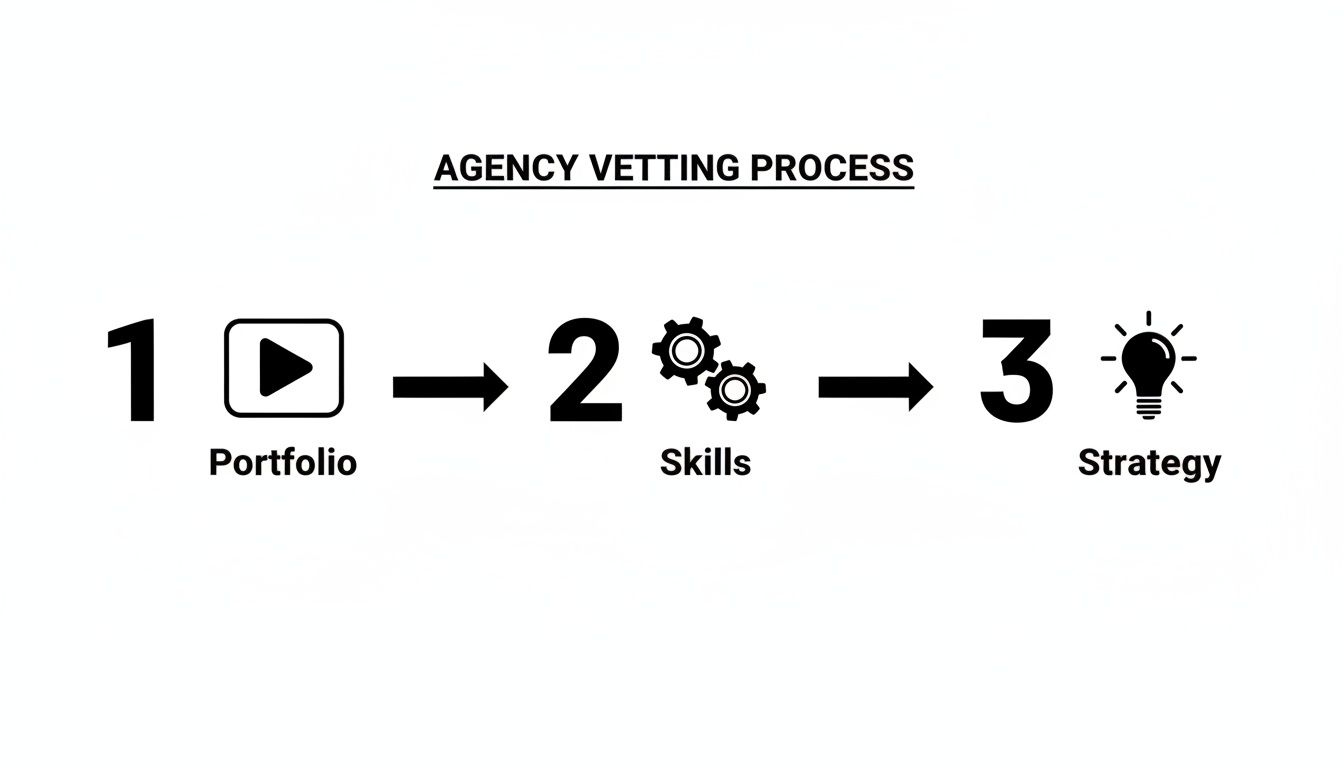
This process really boils down to one thing: a killer portfolio is just the entry ticket. A true partnership needs an agency with the right technical skills and a strategic brain.
The Kickoff and Creative Brief
Everything starts with a discovery call. This is more than just a chat; it’s a deep dive into your project goals, your audience, and the message you need to land. It's where the agency gets to grips with your business, and you get a feel for how they think strategically.
From there, you'll collaborate on the creative brief. Think of this document as the project's constitution. It lays out everything from the key message and tone of voice to visual style ideas and the all-important call to action. A detailed brief is your best defence against crossed wires and wasted time.
Here at Simple Frame, we treat this as a collaborative workshop. We won't just send you a template to fill out. We'll guide you through it, making sure we've captured the soul of your startup's vision before a single frame is ever sketched.
From Storyboard to Sound Design
Once the brief is locked, the storytelling starts for real. The agency will get to work on a script and then a storyboard—a sequence of drawings that maps out every single shot. This is your first look at how the story will unfold visually, and it's a critical moment for you to give feedback on the pacing and composition.
After you've signed off on the storyboard, the heavy lifting of animation production begins. This is usually the longest part of the process, where illustrators, animators, and designers get to work. You'll typically get to see an early version, often called an animatic, to check that the timing and flow feel right.
The final layer is the sound. A professional voice-over and a carefully crafted sound design, from the background music to tiny sound effects, are what transform a good animation into a great one. It’s what gives it that polished, professional feel and emotional punch.
The Final Stretch: Deliverables and Details
As you near the finish line, a few crucial details need your attention. It's smart to get these squared away in your contract right at the beginning to avoid any headaches later.
- Intellectual Property (IP): Who owns what? Typically, you’ll own the final rendered video, but the agency might retain the rights to their working project files. Make sure this is crystal clear.
- Revision Rounds: How many chances do you get to make changes? Most agencies include two or three rounds of revisions at each major stage. Anything beyond that will likely cost extra.
- File Formats: What files will you actually get? You'll need different versions optimised for your website, social media channels like Instagram or LinkedIn, and maybe even investor decks.
A great digital animation agency for startups doesn’t just email you a file and call it a day. They deliver a strategic asset, ready to be deployed. They should be asking where you plan to use the video so they can provide perfectly formatted files for maximum impact on every platform.
By understanding this journey, you shift from just being a client to becoming a true partner. You'll be working hand-in-hand with your agency to create something that doesn't just look amazing but actually moves the needle for your business.
Scaling Your Animation Strategy Beyond One Video
A single, powerful explainer video is a fantastic start, but the smartest startups are already thinking bigger. That first animation isn’t just a finished product; it's the foundation of a visual content engine that can fuel your marketing for months, even years. This is how you maximise every pound of your investment.
The key is to treat that first animation as a goldmine of reusable assets. Think about it: the custom characters, branded icons, and unique visual elements your agency created aren't one-off components. They're the building blocks of a cohesive brand identity.
A forward-thinking digital animation agency will plan for this from the get-go. They’ll design assets in a way that makes them easy to adapt, repurpose, and roll out across all your channels. The result is a consistent, professional look everywhere your audience sees you.
Turning One Project Into a Content Library
Once your main video is complete, the real magic begins. This is when you can start repurposing its core elements to get incredible value. It’s a strategic approach that stretches your budget and keeps your brand visually consistent—absolutely crucial for building recognition in a crowded market.
You can spin off your initial assets into all sorts of formats:
- Short Social Media Clips: Isolate a single powerful moment or feature explanation. These punchy 15-30 second clips are perfect for platforms like LinkedIn, Instagram, or even TikTok.
- Animated GIFs for Emails: A simple, looping GIF of your product in action or your brand character waving can give your email click-through rates a serious boost.
- Website Micro-animations: Use animated icons or illustrations from your video to bring your website to life, drawing attention to key features or calls-to-action.
This approach means you have a steady stream of high-quality content without needing to start a new project from scratch every time. Our guide on marketing with video explores even more ways to put these assets to work.
By repurposing assets, you're not just saving money; you're reinforcing your brand's visual language with every piece of content you share. This consistency builds trust and makes your startup instantly recognisable.
Building a Long-Term Creative Partnership
As your startup grows, your needs will change. Your relationship with your agency should evolve right alongside you, shifting from a one-off project to a long-term creative partnership. An agency that truly understands your brand’s journey can anticipate what you'll need next and scale their support accordingly.
This kind of partnership is becoming vital as the animation market expands. The Poland 3D Animation and Motion Design Market, for instance, was valued at USD 20.5 billion in 2025 and is projected to hit USD 52.0 billion by 2033. This growth shows just how much demand there is from startups for reliable partners who can deliver broadcast-quality content as they scale.
At Simple Frame, building these lasting relationships is what we're all about. We get to know your business, your goals, and your audience. That insight allows us to create content that stays relevant and effective as you move from your launch day to becoming a leader in your market.
Common Questions About Hiring an Animation Agency
Jumping into the world of animation for the first time can feel like learning a new language. For a startup, where every pound and every minute counts, you need clear, straight answers—not jargon. We get it.
Let's cut through the noise and tackle the big questions founders always ask when they're thinking about working with an animation agency. This is all about making you feel confident you're making a smart investment in your startup's future.
How Much Does a 90-Second Explainer Video Cost?
This is always question number one, and the honest answer is: it really depends. A 90-second explainer video can cost anything from a few thousand pounds to well over £20,000. The final price comes down to two things: style and complexity.
Think of it like this: a simple 2D motion graphics video with clean text and icons is going to be on the lower end. On the other hand, if you’re dreaming of a custom 3D animation with unique characters, detailed worlds, and realistic textures, you’re looking at the higher end of that scale.
Several key factors will move the price tag up or down:
- Design Complexity: Are we working with simple, clean icons, or are we creating bespoke, hand-illustrated characters from scratch?
- Animation Detail: How fluid and intricate does the motion need to be? Are we talking basic movement or cinema-quality character acting?
- Creative Extras: The cost of a professional voiceover artist, a licensed music track, and custom sound design all get factored in.
The best approach? Figure out your budget first, then have a frank conversation with potential agencies about what you can realistically achieve. A good partner like Simple Frame will give you a completely transparent quote, breaking down every line item so there are no nasty surprises down the road.
What Is the Average Production Timeline?
Good things take time, but you still need a plan. For a standard 60-90 second animated video, you should typically budget for 6 to 10 weeks from the initial kickoff meeting to getting the final file in your hands. This gives everyone enough breathing room for creativity without rushing the important stuff.
The whole journey is usually broken down into a few key stages:
- Discovery & Scripting (1-2 weeks): This is where we nail down your core message and story.
- Storyboarding & Design (1-2 weeks): We start visualising the script, mapping it out shot by shot.
- Animation Production (2-4 weeks): The most intensive part of the process, where the visuals come to life.
- Sound Design & Revisions (1-2 weeks): We polish everything up with audio and incorporate your feedback.
The single biggest thing that influences this timeline? Your feedback. Getting prompt, clear, and consolidated notes from your team is the fuel that keeps a project moving on schedule. If you have a hard deadline for a product launch or an investor pitch, make sure you mention it on day one.
Do We Own the Final Animation and Source Files?
This is a massive detail that needs to be crystal clear in your contract. In most partnerships, you will own the full rights to the final rendered video files (the .MP4, for example). You can upload it to your website, share it on social media, and use it in your pitch decks—no problem.
However, owning the raw project files—often called source files, like the Adobe After Effects or Cinema 4D projects—is a different story. Some agencies hold onto these as their own intellectual property, while others might transfer them to you for an additional fee. It's absolutely vital to have this conversation upfront, especially if you think you might want to reuse animation assets internally later on.
Make sure your service agreement explicitly states who owns what—both the final video and the source files—before a single frame is animated. This one simple step can save you from a world of headaches.
For a wider look at picking the right marketing partners, this guide on choosing a digital marketing agency for startups is a great read. The same principles of getting clear terms in writing apply everywhere.
Ready to turn your complex idea into a story that sticks? The team at Simple Frame has the strategic eye and creative firepower to help your startup make some noise. Let's start the conversation.
 English
  Polish
  German