
Animated Onboarding Videos for HR and Employee Training a Complete Guide
Think back to your first day at a new job. Chances are, amongst the excitement, you were handed a mountain of paperwork, dense employee handbooks, and sat through endless presentations. It’s a classic experience, but one that’s quickly becoming outdated.
Animated onboarding videos for HR and employee training are here to change that. They swap out those text-heavy documents for dynamic, visual content that’s actually enjoyable to watch. The goal is to simplify everything—from company policies and workflows to culture—making the whole onboarding process smoother for new hires and less of a headache for HR teams.
Why Animated Videos Are a Modern HR Game Changer
In a world where many of us work remotely or in hybrid setups, clear and engaging communication is no longer a "nice-to-have"—it's a necessity. This is precisely where traditional onboarding methods fall short, struggling to hold the attention of a workforce used to getting information quickly and visually.
Animation steps in as the perfect solution. It transforms dry, often-ignored material into a memorable experience. Imagine the difference between reading a complicated furniture manual and watching a clear, step-by-step assembly video. One leads to frustration, while the other gets the job done right. That's the power of animation in onboarding.
The Shift to Visual Learning
Let’s be honest, we’re all used to consuming information visually. This isn't just a fleeting trend; it’s a deep-seated shift in how we learn and remember things. This behaviour is especially clear here in Poland. A recent report showed that a staggering 61% of Polish internet users watched short-form videos in 2023, a huge jump from the previous year. You can explore the full IAB Polska report on short social videos for all the details.
This preference for visual content doesn't just disappear when we clock in for work. By using animated onboarding videos for HR and employee training, companies can connect with new team members in a format they already know and love. It’s not just about making a good first impression; it's about building a foundation for a more engaged and productive workforce from day one.
The real magic of animation is its ability to make abstract ideas tangible. Complex concepts like company values, data security protocols, or intricate software workflows can be brought to life with a clarity that text alone simply can't achieve.
What This Guide Covers
This guide is your complete playbook for bringing animation into your HR strategy. We're moving beyond the "why" and getting straight to the "how," giving you a practical roadmap for success. Here’s what you’ll discover:
- Tangible Benefits: We’ll unpack the real ROI, from boosting knowledge retention to the significant cost savings you can achieve over traditional methods.
- Animation Styles: Learn the difference between 2D, 3D, and motion graphics so you can pick the perfect style for your message and brand.
- Production Workflow: We’ll give you a step-by-step breakdown of the production process, from script to final delivery, making it all feel much more manageable. You can also learn more about the applications of educational animation in our detailed article.
- Distribution and Measurement: Find out the best ways to get your videos in front of new hires and, just as importantly, how to measure their true impact on your business goals.
The Real ROI of Animated Employee Training
When we talk about the return on investment (ROI) for animated training, we're not just throwing around buzzwords. We’re talking about real, measurable impacts on your business that go far beyond a slick-looking onboarding programme. The true value is found in efficiency, consistency, and serious long-term cost savings.
Think about explaining a complex but vital topic, like your company’s new software workflow or data security policy. Handing a new hire a 50-page PDF is like giving them a confusing flat-pack furniture manual—it’s dense, easy to get wrong, and often gets ignored. An animated video, on the other hand, is the expert showing you exactly how to build it, making every step clear, simple, and memorable.
That clarity translates directly into business value. Animation breaks down tricky subjects, making them easier for new hires to absorb and, most importantly, remember. This means fewer follow-up questions for HR, faster ramp-up times, and a more confident start for every single member of your team.
Quantifying the Financial Impact
The most powerful case for animated onboarding videos for HR and employee training comes down to the numbers. A single, one-time investment in a quality video series can wipe out a whole list of recurring costs tied to traditional, in-person training.
Just look at these direct cost reductions:
- Travel and Venue Costs: Forget flying in trainers or booking pricey conference rooms for every new group of hires.
- Material Expenses: Say goodbye to the endless cycle of printing, distributing, and updating physical handbooks.
- Trainer Time: You can free up your HR and management teams from repeating the same introductory sessions over and over. They can then focus on higher-value, personalised support where it really matters.
This move creates a training asset that’s both scalable and incredibly consistent. Every new employee gets the exact same high-quality message, no matter where they are or when they start. This ensures a standard level of knowledge across the entire organisation. If you need to build a solid business case, there are some great resources out there for proving the ROI on training.
To give you a clearer picture, let's compare the old way with the new.
Comparing Onboarding Methods Traditional vs Animated
| Feature | Traditional Onboarding (Manuals, In-Person) | Animated Video Onboarding |
|---|---|---|
| Engagement | Low; often passive and text-heavy. | High; uses visuals and storytelling to capture attention. |
| Consistency | Varies by trainer and session. | 100% consistent message for every employee. |
| Scalability | Difficult and expensive to scale across locations. | Infinitely scalable with no extra cost per viewer. |
| Cost-Effectiveness | High recurring costs (travel, printing, venue). | One-time investment with long-term savings. |
| Retention Rate | Lower, as information is harder to digest. | Up to 60% higher knowledge retention. |
| Accessibility | Limited to specific times and places. | On-demand access, available 24/7 on any device. |
As you can see, the shift to animated video isn't just a minor upgrade; it's a fundamental improvement in how training is delivered.
Boosting Knowledge Retention and Performance
The financial wins are only half the story. The other, equally important part is human performance. It’s been shown that animated educational content can improve knowledge retention by up to 60% compared to just reading text. That’s a powerful statistic for any HR team that wants to build a skilled and compliant workforce from day one. In our own guide, we explore how video marketing strategies use similar engagement principles to get results.
In the real world, better retention means fewer mistakes, smoother roll-outs of new compliance rules, and more consistent application of company policies. For Polish companies in regulated industries like finance or manufacturing, that kind of consistency isn't just nice to have—it's absolutely critical.
The global animation market shot past $412.96 billion USD in 2023, with corporate training listed as a major driver. The proof is in the results: when animated modules cut in-person onboarding time by 20–30% while boosting retention, the investment can pay for itself within a single hiring cycle.
This quick payback is a huge reason why so many organisations in Central Europe are now working with Polish animation studios. They’re drawn not just by the cost-efficiency, but also by a deep, local understanding of compliance, labour laws, and workplace culture. This ensures the final animation is not only effective but also perfectly relevant. With a projected 40% annual growth in the use of animation for training, the trend is clear: businesses are waking up to its power to deliver a measurable and impressive ROI.
Choosing the Right Animation Style for Your Message
Picking the right animation style is a bit like choosing the right outfit for an occasion. You need it to fit your brand, your message, and the audience you're talking to. The style you land on for your animated onboarding videos for HR and employee training will set the tone for everything, so it’s a decision worth getting right from the start.
Each style has its own personality and its own strengths. Getting this choice right ensures your video doesn't just look good, but actually does its job—connecting with new hires, explaining complex ideas clearly, and making your company culture feel tangible from day one. This one decision has a ripple effect on everything from engagement to the final budget.
2D Animation: The Storyteller
If your goal is to create a warm, human connection, 2D animation is almost always the answer. This style is built around characters and narrative, letting you create a custom cartoon world to welcome new employees. It's perfect for explaining company culture, walking through common workplace scenarios, or introducing key team members in a friendly, approachable way.
2D really shines when you need to add a personal touch. A character-driven story can show a new hire what a typical day looks like or use relatable situations to bring your company’s core values to life. It’s a fantastic way to make abstract concepts feel real and far less intimidating.
Because it’s so focused on storytelling, 2D animation is brilliant for building an emotional bridge with new starters. It helps them see themselves as part of the company's journey from their very first day, making the whole onboarding process feel more personal and welcoming.
Motion Graphics: The Data Visualiser
Got a complex process to explain or a bunch of data to present? Motion graphics is your go-to tool. This style is all about bringing text, shapes, icons, and logos to life in a clean, dynamic, and professional way. It’s less about telling character-driven stories and more about delivering information with absolute clarity.
Think about trying to explain your company's org chart or a new IT security protocol with just a wall of text. It would be a nightmare. Motion graphics transforms that dense information into a smooth, flowing visual that’s incredibly easy to follow and digest.
It’s the perfect fit for:
- Process Explainers: Showing step-by-step software workflows or safety procedures.
- Data Visualisation: Turning dry statistics and performance metrics into slick, animated charts and graphs.
- Concept Breakdowns: Simplifying complex business models or compliance rules into bite-sized visual pieces.
This style screams efficiency and modernity, making it a natural choice for corporate and tech-focused training. If you want to explore the wider world of animation, you can check out the main types of animation to see what else is out there.
3D Animation: The Realist
When you need to show off something with a high degree of realism, detail, or spatial awareness, 3D animation is the premium option. It adds depth and dimension, letting you showcase products, equipment, or physical spaces from literally any angle. It’s the closest you can get to a hands-on demo without anyone leaving their desk.
Imagine training a technician on a complex piece of machinery or showing your sales team the inner workings of a new product. With 3D animation, you can build a photorealistic model that can be rotated, taken apart, and explored in ways live-action video could never manage.
While 3D requires a bigger investment in both time and budget, its impact is unparalleled for certain jobs. It’s the undisputed champion for demonstrating physical products, simulating technical procedures, or creating immersive walkthroughs of a new office layout. For highly technical or product-centric training, the clarity and detail you get from 3D are often non-negotiable.
A Practical Guide to Producing Your Onboarding Video
Creating professional animated onboarding videos for HR and employee training can feel like a massive undertaking. But the secret is to break it down. Don't think of it as one giant project; see it as a series of manageable steps, each one building on the last. This roadmap will walk you through the entire journey, taking you from a rough idea to a polished, effective training tool.
The whole process is a partnership between your team and the animation studio you choose. You bring the essential knowledge, the goals, and the feedback. The studio brings the creative flair and technical skill to make it all happen. A clear workflow is what keeps everyone on the same page, hitting deadlines and making sure the final video does exactly what you need it to.
Phase 1: The Discovery and Strategy Foundation
This first phase is everything. It sets the direction for the entire project, so you can't afford to rush it. Before a single frame is drawn, you need to define what success actually looks like. This is where you nail down your core message, figure out exactly who you're talking to (new hires in sales? the entire company?), and decide on the key things you want them to walk away remembering.
Together with your production partner, you'll tackle the big questions:
- What's the main goal here? Are we explaining company culture, teaching a new software, or going over compliance rules?
- Who is our audience? What’s their role? What do they already know coming in?
- What's the right tone? Should it be formal and corporate, or warm and welcoming?
Think of this stage as drawing up the blueprints for a house. If you don't have a solid plan, the rest of the build is going to be chaotic. A strong discovery phase ensures your video is built on a solid strategic foundation.
Phase 2: Scripting and Storyboarding
Once the strategy is locked in, the real creative work begins. It all starts with the script. The script is the heart and soul of your video; it's not just the voiceover, but also the guide for all the on-screen action. A great script takes your key messages and weaves them into a story that’s clear, concise, and actually keeps new starters engaged.
Next up is the storyboard. This is essentially a comic-strip version of your video, mapping out every scene. It shows character movements, how one scene flows into the next, and where text or graphics will pop up. The storyboard is your first chance to really see the video, giving you the perfect opportunity to make changes before the heavy lifting of animation begins.
The storyboard is your safety net. It’s far easier and more cost-effective to revise a drawing than it is to change a fully animated scene. Taking the time to get the storyboard right saves significant time and money later on.
Phase 3: Design and Animation in Motion
Now for the magic. Working from the approved storyboard, designers will create all the visual assets. This means custom characters, backgrounds, icons—every graphical element that will appear on screen. The style will be carefully matched to your company's brand guidelines to keep everything looking consistent and professional.
With the designs signed off, the animators step in to bring the static images to life. They create the movement, transitions, and dynamic effects that make animated videos so captivating. This is often the longest part of the production, demanding a keen eye for detail to get that smooth, polished look. A good studio will keep you in the loop with progress updates, so you can give feedback at key moments.
The image below shows some of the common styles brought to life in this phase, from character-driven 2D to data-focused motion graphics.
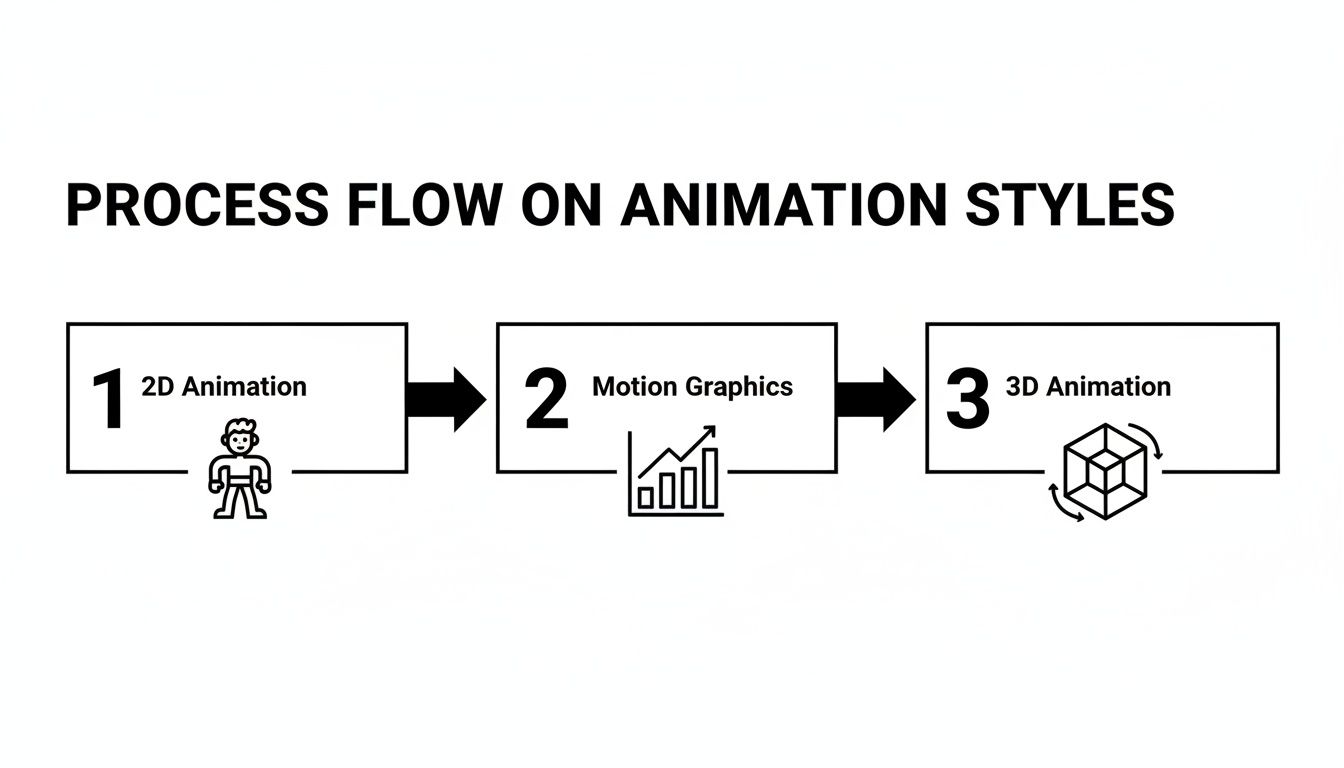
This helps illustrate how the right animation style is chosen to fit the video's purpose, whether that's telling a story or explaining a complex process.
Phase 4: Polishing in Post-Production
The final stretch is all about bringing the different pieces together. A professional voiceover is recorded and perfectly synchronised with the animation. Sound design is added—you'd be surprised how much background music and a few well-placed sound effects can boost the video's impact and emotional connection.
This stage is also for final reviews and adding crucial accessibility features. Accurate subtitles or captions are a must for inclusivity, making sure your content works for everyone, including employees with hearing impairments or those who aren't native speakers. If you have a global team, this is also when you'd add translated voiceovers. For more tips on this part of the process, a comprehensive guide to training video creation can offer some valuable pointers.
By following this structured path, what seems like a complex creative project becomes a predictable and collaborative process. The result? A high-quality video that truly supports your HR goals. And if you’re looking to work with specialists, partnering with an experienced explainer video agency can guarantee a smooth ride from concept to completion.
How to Distribute Your Videos and Measure What Matters

Creating a brilliant series of animated onboarding videos for HR and employee training is a fantastic achievement, but let's be honest, production is only half the battle. A video's true value is only realised when it gets in front of the right people at the right time—and actually works.
Without a solid plan for distribution and measurement, even the most engaging content can get lost in the digital shuffle. The goal is to move beyond simply making a video and start building a strategic asset. This means embedding your animations into the new hire's journey and then tracking the data that proves they’re making a real difference.
Let's dive into how to get your videos seen and how to measure what truly counts.
Smart Distribution: Getting Your Videos Seen
Your onboarding videos should feel like a natural part of the welcome process, not another task on a new employee's checklist. The best way to do this is to meet them where they already are during those crucial first days and weeks. A multi-channel approach is your best bet for reinforcing key messages without being repetitive.
Here are the most effective places to put your videos:
- Learning Management System (LMS): This is the natural home for your training content. Integrating videos into your LMS lets you build structured learning paths, track who has watched what, and pair animations with quizzes or follow-up reading.
- Welcome Emails: Imagine their first official email from the CEO or HR containing a short, vibrant "Welcome to the Team" video. It creates an immediate, personal connection and sets a brilliant tone before they even walk through the door.
- Company Intranet or Hub: Create a dedicated resource library where new hires can easily find and re-watch all the onboarding videos. Think of it as an on-demand guide they can turn to whenever a question pops up.
- Direct Team Communication: Managers can share role-specific training videos through platforms like Slack or during their first one-on-one meetings. This personal touch makes the content feel incredibly relevant and tailored just for them.
By using a mix of these channels, you guarantee every new starter gets a consistent, high-quality onboarding experience.
Moving Beyond Views to Real KPIs
It's tempting to get excited about view counts, but those numbers rarely tell the whole story. To understand the real impact of your animated onboarding videos for HR and employee training, you need to track key performance indicators (KPIs) that connect directly to learning and business goals.
Forget raw view numbers. The most valuable insights come from understanding behaviour: Did they watch to the end? Where did they get bored? And, most importantly, did they actually learn what you needed them to?
Focus your energy on these more meaningful metrics:
- Completion Rate: This might be the single most important video metric. A high completion rate—you should be aiming for 80% or more—is a clear sign your content is genuinely engaging and holding people's attention.
- Engagement Analytics: Most modern video platforms offer heatmaps that show which parts of the video were re-watched, skipped, or where viewers dropped off completely. This is gold for spotting confusing sections that might need a tweak.
- Quiz Scores: Following up a video with a quick quiz is the most direct way to measure if the information stuck. High scores are a clear win, showing the video did its job.
- Time-to-Productivity: This is a big-picture business KPI. It tracks how quickly a new hire becomes a fully contributing member of the team. If you see this time decrease after rolling out video onboarding, you have powerful proof that your programme is working.
Calculating the True Return on Investment
This is where you connect the dots and show the real value. By linking your video metrics to tangible business outcomes, you can build a rock-solid case for ROI.
For example, you can correlate high completion rates on a compliance video with a drop in policy-related HR issues. Or you could link strong quiz scores on a new software tutorial to fewer support tickets from new starters.
When you track these KPIs, you’re no longer just talking about making a "nice-to-have" video. You're demonstrating with hard data that your investment in animation makes the entire organisation more efficient and effective. It completely changes the conversation with leadership from one of cost to one of undeniable value.
Common Questions About Animated Onboarding Videos
Even when the benefits are clear, HR and training managers usually have some practical questions before jumping into the world of animation. It’s only natural to want the specifics on timelines, costs, and the little details that make a project successful. Let's tackle the most common questions we hear, giving you direct answers to help you move forward with confidence.
You understand why you need animated onboarding videos for HR and employee training; this is the part where we nail down the how.
How Long Should an Onboarding Video Be?
In modern training, shorter is almost always better. The best approach is a series of microlearning videos, each running between two and five minutes long. This respects the reality of modern attention spans and makes even complex topics feel approachable and easy to digest. We know from research that viewer attention takes a nosedive after about ten minutes.
Think of it this way: instead of a single, long video trying to cover everything, you break the content into focused, bite-sized modules:
- A quick two-minute video on company culture and values.
- A three-minute guide to getting IT and software set up.
- A four-minute walkthrough of the employee benefits package.
If you absolutely must create a longer video, save it for truly foundational topics. Even then, it needs to be broken up with clear chapters or interactive moments to keep your new hires locked in. The learning goal should always define the video’s length, not the other way around.
What Is a Realistic Budget for an Animated Onboarding Series?
That’s the big question, and the honest answer is: it really depends. The budget for an animated video series is shaped by the style you choose, the total runtime, and how complex the visuals need to be. A simple 90-second 2D motion graphics video could start in the low thousands, whereas a full series with custom 3D animation will naturally be a more significant investment.
The main factors that influence the cost are:
- Animation Style: 2D animation is generally more budget-friendly than detailed 3D work.
- Total Runtime: More minutes of animation simply means more production time.
- Asset Complexity: Creating custom characters, detailed backgrounds, and intricate movements takes more resources than using simpler graphic elements.
The trick is to see this cost not as an expense, but as a strategic investment. When you weigh the one-time production fee against the recurring costs of in-person training—things like travel, printed materials, and your team's time—the long-term financial sense of animation becomes crystal clear.
The best way to get an accurate figure is to approach a studio with a clear brief outlining what you want to achieve. That’s how they can give you a quote that truly fits your project.
How Do We Choose the Right Animation Agency?
Picking the right creative partner is one of the most critical decisions you'll make. You're not just looking for a talented animator; you need a strategic consultant who gets the nuances of corporate training. Look for an agency whose portfolio is full of corporate explainers and educational content, not just flashy commercials.
The right partner will dig deep, asking questions about your learning objectives, your audience, and how you’ll measure success. They should be just as interested in your business goals as they are in the creative side of things.
Before you sign anything, be sure to:
- Carefully review their case studies and what past clients have to say.
- Ask for direct references from clients in a similar industry to yours.
- Make sure their production process is transparent, collaborative, and clearly mapped out.
A professional agency that can handle the entire process for you—from strategy and scriptwriting right through to the final video delivery—will make the whole experience smooth and effective.
Can We Easily Update Videos if Policies Change?
Yes, but it takes a little planning. The secret is to bring up the possibility of future updates with your animation agency from the very beginning. When a video is designed to be modular from the start, it becomes much easier and more cost-effective to edit later on.
For example, specific details like statistics, dates, or policy numbers can be designed as text overlays on the screen. This often means you can just swap out the text without having to re-animate the whole scene. A major change to your company’s structure would obviously require more work, but small tweaks are very manageable.
A professional studio will always keep your project files archived. This ensures that as your company grows and policies evolve, your animated onboarding videos can evolve right alongside it. This kind of flexibility makes animation a much more sustainable training tool than live-action, which would require expensive and time-consuming reshoots for every little change.
At Simple Frame, we specialise in creating clear, engaging, and effective animated videos that make your onboarding process smoother and more memorable. Discover how our animation services can transform your HR and employee training.
 English
  Polish
  German